Medicaid Transformation Project (MTP)
The Medicaid Transformation Project (MTP) is Washington state's Section 1115 Medicaid demonstration waiver. MTP is an agreement between the Health Care Authority (HCA) and the Centers for Medicare & Medicaid Services (CMS) that allows our state to develop innovative programs and services that improve Washington’s health care system using approved, federal Medicaid dollars. In January 2017, our state began the initial MTP waiver and on June 30, 2023, CMS approved the MTP renewal — called MTP 2.0 — to continue the work through June 30, 2028.
An overview of MTP 2.0
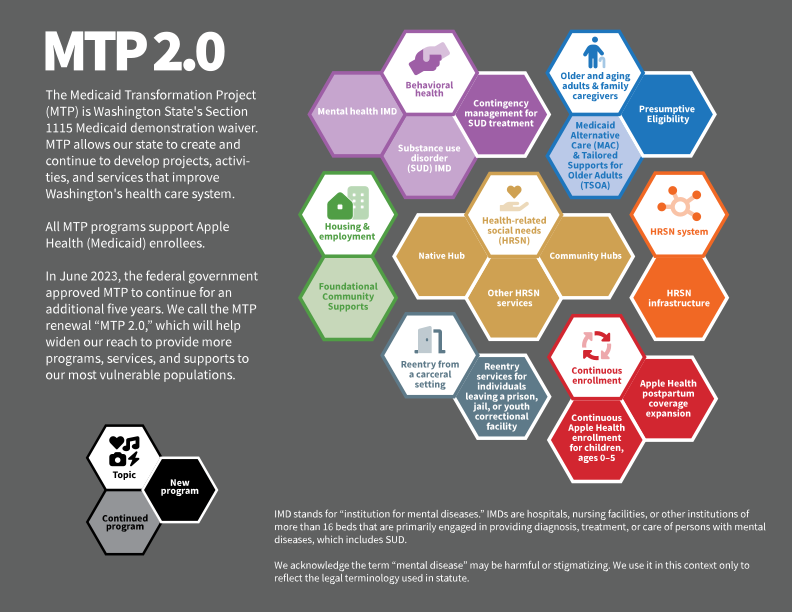
- Long description: MTP 2.0 infographic
-
The graphic is a circular, infographic-style diagram. In the center, the title “Medicaid Transformation Project 2.0” appears in bold, black text. Radiating outward from this center are eight evenly spaced “wedge” sections, each in a different color. Each section has a heading in bold font that represents a key MTP 2.0 program area or initiative, a small icon that visually represents the program, and one or more bullet points describing specific services under the program.
Starting from the upper-left and moving clockwise:
Behavioral health services (purple section with a handshake icon)
This section highlights services related to mental and behavioral health. The bullet points include:
- Contingency management
- Mental health IMD (Institutions for Mental Diseases)
- Substance use disorder IMD
Older adult care services (blue section with an older adult icon holding a cane).
This section highlights services for aging populations. The bullet points include:
- Presumptive eligibility
- Medicaid Alternative Care (MAC)
- Tailored Supports for Older Adults (TSOA)
Housing and employment services (peach-colored section with a house and building icon)
The bullet points include:
- FCS Supportive Housing
- FCS Supported Employment
- Housing Transition Navigation
- Rent/Temporary Housing
Community Information Exchange (blue-gray section with a network and nodes icon)
The bullet point explains what the program is:
- Statewide care coordination infrastructure and technology
Community Care Hubs and Native Hub (beige section with a checklist icon)
The bullet point specifies the key function of the hubs:
- HRSN screening and referrals
Health-related social needs (HRSN) services (green section with a heart-in-hand icon)
The bullet points indicate the HRSN services:
- Nutrition supports
- Home modification services
- Medical Respite Care
- Caregiver respite
Eligibility expansions (yellow section with a circular arrows/refresh icon)
This section highlights programs with expanded health care coverage. The bullet points include:
- Apple Health ages 0–5
- Postpartum expansion
- Former foster care youth coverage
Reentry Initiative (red section with a doorway icon)
The bullet point explains what the program offers:
- Health care services for individuals leaving incarceration
Overall, the design conveys that the Medicaid Transformation Project 2.0 is a multi-faceted, integrated effort with initiatives, programs, and service areas that support different populations and needs.
MTP 2.0 programs
As our state's Section 1115 Medicaid demonstration waiver, MTP 2.0 allows our state to develop and implement innovative projects, activities, and services that improve Apple Health (Medicaid) and support Apple Health enrollees. The goals of MTP 2.0 are to:
- Expand coverage and access to care, ensuring that people can get the care they need.
- Advance whole-person primary, preventive, and home- and community-based care.
- Accelerate care delivery and payment innovation focused on health-related social needs.
In partnership with communities and organizations across the state, we will accomplish these goals through the following MTP 2.0 programs:
- Behavioral health services
-
There are three behavioral health programs on MTP 2.0 that support individuals who are receiving services for substance use disorder (SUD) treatment or serious mental illness. Two programs are offered in IMDs, or institutions for mental diseases. IMDs is a federal term defined as hospitals, nursing facilities, or other institutions of more than 16 beds regardless of licensure that are primarily engaged in providing diagnosis, treatment, or care of persons with mental diseases. MTP 2.0's behavioral health programs are:
- Substance use disorder IMD
- Mental health IMD
- Contingency management
Learn more about the behavioral health services under MTP 2.0.
- Community Information Exchange (CIE)
-
In 2024, the Washington State Legislature appropriated funding under MTP 2.0 to implement a statewide Community Information Exchange (CIE) program. A CIE program is technology that helps community-based workers coordinate services from a cross-sector of social care partners – social service, community, Tribal, government, physical and behavioral health organizations – so patients have better access to health-related social needs (HRSN) services and the supports they need to improve their health.
- Health-related social needs (HRSN) services
-
The way communities and individuals experience health and health care is not just based on access to medical services. There are additional factors that support or hinder one’s health or access to health care. Health-related social needs (HRSN) refer to the unmet needs from these circumstances that can lead to or cause poor health outcomes. MTP 2.0 supports HRSN programs in communities across the state, including:
- HRSN screening and referrals
- Housing transition navigation services
- Rent and temporary housing services
- Medical respite care
- Caregiver respite
- Nutrition supports
- Home accessibility modifications, remediation, and adaptation services
- Housing and employment services
-
Foundational Community Supports (FCS) provides supportive housing and supported employment services to our most vulnerable Medicaid beneficiaries. These services are designed to promote self-sufficiency and recovery by helping participants find and maintain stable housing and employment.
In addition to the FCS programs, HCA offers two HRSN housing benefits under MTP 2.0:
- Housing Transition Navigation, which aims to remove barriers to affordable housing, including transition costs and housing deposits to help a person establish a basic household, and
- Rent/Temporary Housing, which provides stable living situations for individuals transitioning out of institutional care settings who are homeless or at risk of homelessness.
- Older adult care services
-
The goal of MTP 2.0's older and aging adults services is to help change the health care delivery system by providing additional options for people with long-term care needs.
- Medicaid Alternative Care (MAC) provides support for unpaid family caregivers caring for eligible adults who are not currently accessing Apple Health long-term services and supports.
- Tailored Supports for Older Adults (TSOA) establishes a new eligibility category and benefit package for people who may need long-term services and supports in the future to avoid or delay impoverishment and the future need for Apple Health-funded services.
- Reentry Initiative – reentry from a carceral setting
-
The Reentry Initiative provides set of health care services for Apple Health-eligible individuals leaving incarceration. MTP 2.0, carceral facilities across the state are partnering with HCA, community organizations, health care providers, and other state agencies to offer these essential services. The key goals are to:
- Prepare people for a successful transition into their community to help them live their healthiest life.
- Improve health outcomes and reduce recidivism (re-offense), emergency department visits, overdoses, and death.
- Support SUD recovery and target infectious diseases like Hepatitis C before a person’s release.